
Europe’s Circular Economy: 2030 Outlook
The Circular design, clean energy, and resilient value chains - the EU’s transition toward sustainable competitiveness.
At a Glance
11.8%
Circular material use (EU-27, 2023)
×2 by 2030
Targeted increase under EU Action Plan (CMUR)
€86-126 B
Hydrogen infrastructure required by 2030
100%
EU-fleet-wide CO₂ emission target, 2035 onwards
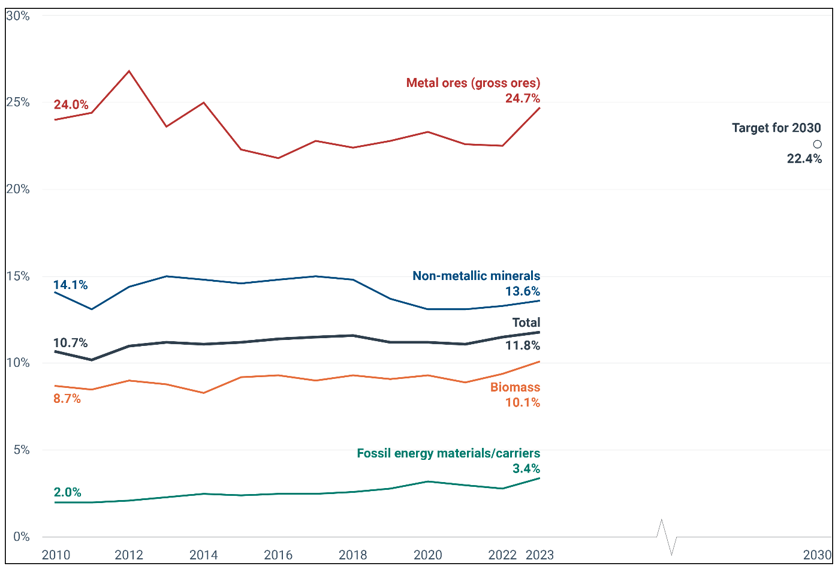
Circular Material Use Rate: What it means
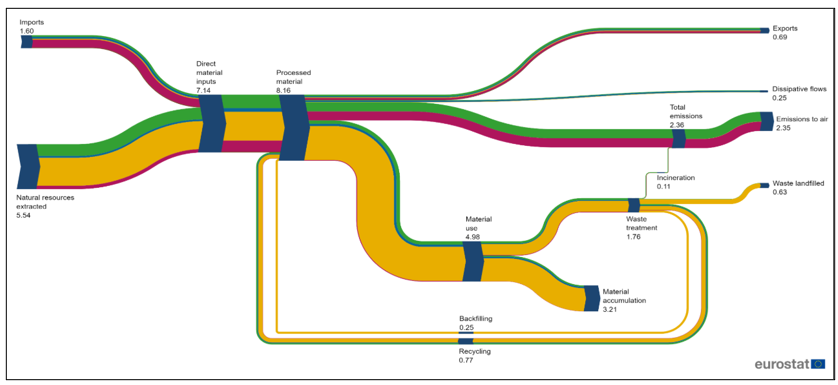
The Circular Material Use Rate (CMUR) quantifies the proportion of all materials consumed in the EU that come from recycled waste. It provides an essential measure of progress toward a regenerative economy. As demand rises across industries, keeping materials in play for longer and minimizing waste becomes increasingly urgent.
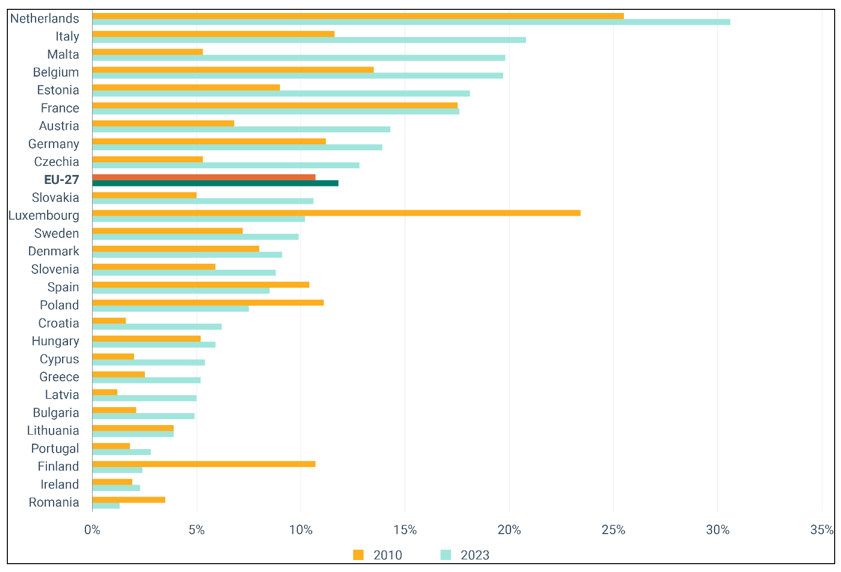
Uneven progress across member states
The Netherlands leads with 30.6% circularity (2023). These differences stem from variations in infrastructure, industrial focus, and policy. Both the Netherlands and Italy recycle over one-fifth of their total material use - evidence that rapid transition is achievable with proactive policies and innovation.
- In the Netherlands, CMUR already exceeds the EU’s 2030 target by more than seven percentage points.
- In Italy, investments and regulatory ambition are bridging the circularity gap.
Source: European Environment Agency (EEA, 2024)
Why Circularity always matters
Despite progress, Europe’s circularity remains low, with most consumption relying on virgin materials. To double the CMUR to 24% by 2030, the EU must accelerate reforms, enhance infrastructure, and strengthen market incentives. High-performing nations offer a blueprint for scalable success.
Signals for Business Leaders
25%
Improvement in EU resource productivity (2010-2023)
80%
Part of products’ environmental impacts are determined at design phase
700,000 new jobs
Projected by 2030 in recycling, remanufacturing, and repair
Climate neutrality by 2050, and building a more resilient and competitive Europe.
16%
EU SET Plan: energy use reduction in buildings by 2030 (vs 2020)
90%
Of biodiversity loss is caused by resource extraction & processing

